


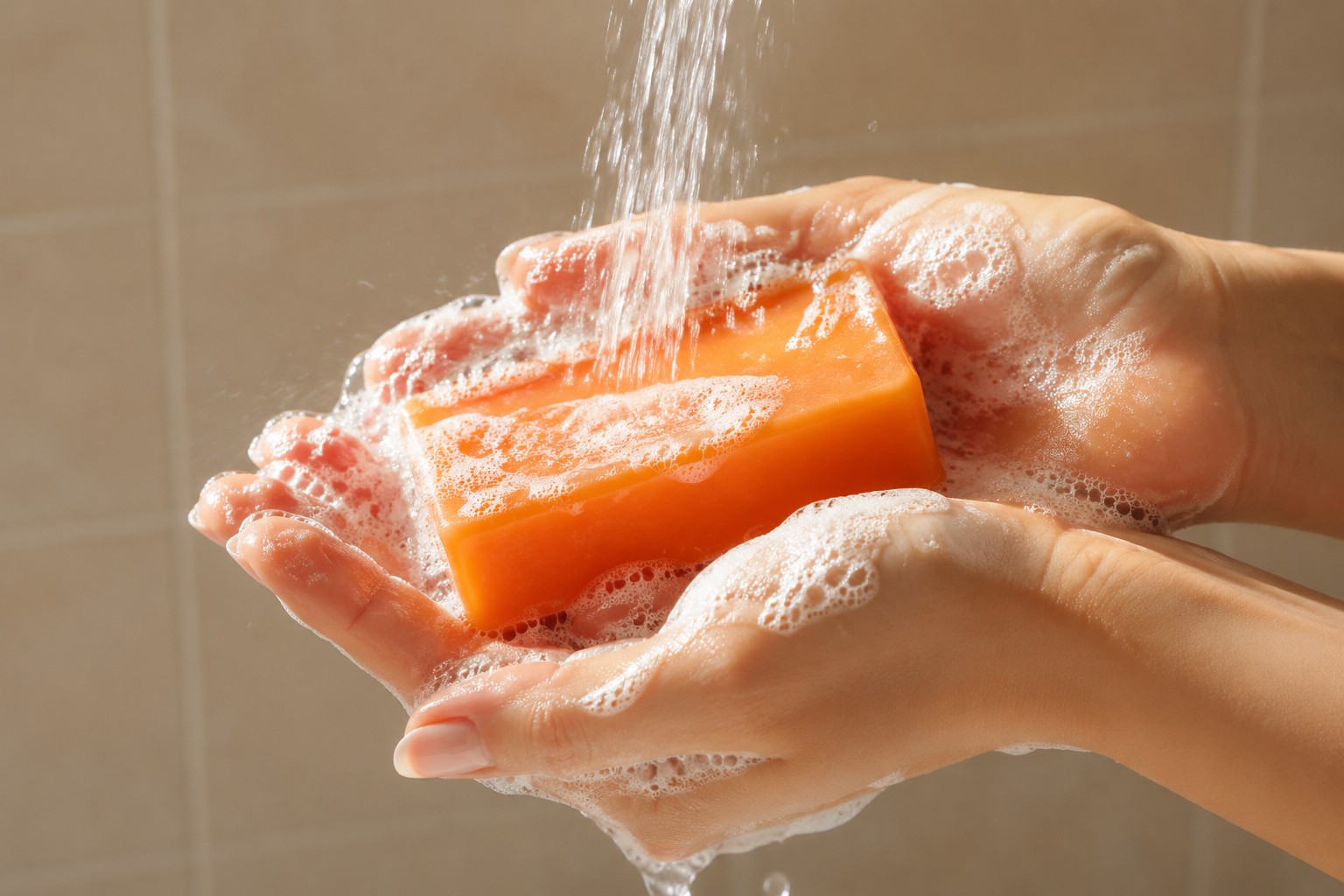
Search for coconut oil in any acne forum and you’ll find the same verdict repeated: it scores a 4 out of 5 on the comedogenic scale, so it clogs pores, so avoid it. Then check the ingredient list on your favorite bar soap and there it is, sodium cocoate, the soap form of coconut oil. So is your cleanser quietly working against your skin?
The honest answer is more nuanced than either camp suggests. The rating is real, but it was built to answer a different question than the one a bar of soap raises.
Where the “4 out of 5” Comes From
The comedogenic scale most people cite traces back to work by dermatologist James Fulton and colleagues, published in the Journal of the American Academy of Dermatology in 1984. Their method used the rabbit ear assay: a test material was spread on the inner surface of a rabbit’s ear once a day, five days a week, for two weeks, and the ear was then scored for the development of comedones (clogged follicles) on a scale of 0 to 5. Coconut oil landed at 4.
Two details in that method matter for everything that follows. First, the material was applied as a leave-on product, repeatedly, for two weeks. Second, it was tested on rabbit skin, which is a convenient model but not a perfect stand-in for human faces. Researchers and cosmetic scientists have long pointed out that the rabbit ear is more sensitive than human facial skin and tends to overpredict pore-clogging risk, and that results also depend on the concentration, the vehicle, and how often the material is applied.
None of that makes the rating meaningless. Coconut oil is dominated by lauric acid (roughly 45 to 50 percent of its fatty acids) along with myristic and palmitic acids, and heavy saturated oils sitting on skin around the clock are a plausible trigger for breakouts in people who are prone to them. It just means the number is a screening tool for leave-on products, not a verdict on every product that contains a coconut-derived ingredient.
Raw Coconut Oil vs. Saponified Coconut Oil
Here’s the chemistry point that most “coconut oil clogs pores” articles skip. When coconut oil is made into soap, it goes through saponification: the triglycerides react with an alkali and are converted into fatty acid salts, namely sodium cocoate, plus glycerin. The finished bar no longer contains coconut oil in the form that was tested on those rabbit ears. It contains the salts of coconut’s fatty acids, which behave as surfactants: their job is to bind to oil and dirt and rinse away.
That distinction cuts two ways, and it’s worth stating both.
In favor of soap: a cleanser is on your skin for perhaps thirty seconds to a minute before it’s rinsed off, not sitting there for hours like a face oil or balm. The exposure model behind the 4 out of 5 rating (a daily layer left in place) simply isn’t how a bar soap is used. To our knowledge, there’s no published comedogenicity study that rates a finished coconut-based soap bar the way Fulton rated the raw oil, so claims in either direction, “it’s fine” or “it’s guaranteed to clog,” go beyond what the data directly shows.
Against complacency: coconut-based soap has its own known drawback, and it isn’t pore-clogging. Coconut soaps are exceptionally good at cleansing and lathering, which is exactly why they can feel stripping when they make up most of a recipe. The tight, squeaky feeling after washing is a sign the skin barrier is losing lipids and water, and for acne-prone skin an over-stripped barrier can make things worse rather than better. The question for any coconut soap isn’t just “does it clog,” it’s “does it balance cleansing with conditioning.”
The Part Coconut Oil Gets Right
It would be unfair to discuss coconut oil’s downsides without mentioning why formulators keep using it. A 2009 study in the Journal of Investigative Dermatology by Nakatsuji and colleagues found that lauric acid, the dominant fatty acid in coconut oil, has antimicrobial activity against Propionibacterium acnes (now classified as Cutibacterium acnes), the bacterium associated with inflammatory acne. That finding is often used to argue coconut oil is good for acne, which overreaches in the other direction: a lab result showing a fatty acid inhibits bacteria is not the same as clinical evidence that a coconut oil product clears breakouts on human skin.
The more defensible takeaway is that coconut-derived fatty acids bring useful cleansing and antimicrobial properties to a wash-off product, while the same saturated-oil profile is the reason to be cautious with the raw oil as an all-night leave-on.
How Shea Butter and Formulation Change the Picture
A bar that’s mostly coconut oil behaves very differently from one that blends it with softer, more conditioning fats. Shea butter, for example, is rich in oleic and stearic acids and contains a naturally unsaponifiable fraction that stays in the bar after saponification, which is part of why it’s widely used to take the edge off coconut’s strong cleansing action. In practice, a recipe that pairs coconut oil’s lather and cleansing power with shea butter’s conditioning is aiming for the middle ground: enough cleansing to feel clean, enough softness that skin doesn’t feel stripped afterward.
Other formulation details matter too: the proportion of each oil, how much oil is deliberately left unsaponified, how long the bar is cured, and what actives are added. Ingredient labels can tell you what’s in a soap, but not in what proportion, which is why a patch test and a few weeks of observation tell you more than any rating chart.
Who Should Still Be Careful
People with a history of breakouts on the face or back. If you’ve noticed that coconut oil as a moisturizer breaks you out, that experience is real information about your skin. A rinse-off bar is a much lower exposure, but start with body use or a few times a week and watch for changes before committing to daily facial use.
Anyone with fungal acne (Malassezia folliculitis). Some people with this condition report flare-ups with fatty acid-rich products, although the evidence here is weaker and mostly anecdotal. If you have persistent uniform, itchy bumps that don’t respond to regular acne treatment, a dermatologist can tell you whether it’s fungal.
Very dry or reactive skin. Because coconut-based cleansers are strongly degreasing, skin that already struggles to hold moisture may do better with a milder cleansing schedule and a moisturizer afterward.
How to Use a Coconut Oil Soap Wisely
- Rinse thoroughly. Leftover film is what you’d want to avoid, particularly along the hairline, jaw, and upper back, where breakouts often cluster.
- Patch test first. Try it on a small area for several days before using it on the face.
- Follow with moisturizer if skin feels tight. A squeaky-clean feeling isn’t a goal; it’s a hint to adjust frequency.
- Give it a fair trial. Skin changes from a new cleanser take a couple of weeks to read accurately, so judge by weeks, not by one wash.
Where This Fits With PALFICAB
Our Papaya & Lemon Soap pairs coconut oil with shea butter, the combination described above: coconut for lather and cleansing, shea for conditioning. We’d rather be straightforward than promise it suits every skin type. If you’re acne-prone or have very sensitive skin, treat it like any new product: patch test, start gradually, and pay attention to how your skin responds over a couple of weeks.
Frequently Asked Questions
Does coconut oil soap clog pores? The “4 out of 5” rating applies to raw coconut oil left on skin, tested on rabbit ears. Soap is a different material (the saponified salts of coconut’s fatty acids) that’s rinsed off after brief contact. There’s no direct comedogenicity rating for finished soap bars, so the honest answer is that it varies by person and formulation.
What is sodium cocoate? It’s the soap form of coconut oil, created when the oil’s fatty acids react with sodium hydroxide during saponification. It acts as a cleansing surfactant rather than a leave-on oil.
Is coconut oil soap good for acne-prone skin? Lauric acid has shown antimicrobial activity against acne-associated bacteria in laboratory research, but that isn’t proof a soap treats acne. Because coconut-heavy soaps can be strongly stripping, balance and gentle use matter more than any single ingredient.
Why does my skin feel tight after using coconut soap? Coconut-based cleansers lather richly and remove oil efficiently, which can leave skin feeling dry if the bar contains little conditioning fat or you wash too often. Using it less frequently and moisturizing afterward usually helps.
Should I avoid coconut oil if I have fungal acne? Some people with Malassezia folliculitis report sensitivity to fatty acid-rich products, though evidence is limited. If you suspect fungal acne, ask a dermatologist before changing your routine.
The Bottom Line
Coconut oil’s 4 out of 5 comedogenic rating is a legitimate caution for leave-on oils, but it was measured on raw oil sitting on rabbit skin for two weeks, which isn’t how a bar of soap is used. A saponified, rinse-off coconut soap is a different product with a different risk profile, and its more realistic downside is over-cleansing rather than clogged pores. Judge a specific soap by its overall formulation, patch test it, and trust how your own skin responds over a few weeks.
This article summarizes published research for general educational purposes and isn’t medical advice. If you have persistent acne or a diagnosed skin condition, consult a dermatologist.
Sources referenced
- Fulton, J.E. Jr., Pay, S.R., Fulton, J.E. III. “Comedogenicity of current therapeutic products, cosmetics, and ingredients in the rabbit ear.” Journal of the American Academy of Dermatology, 1984.
- Nakatsuji, T., et al. “Antimicrobial property of lauric acid against Propionibacterium acnes: its therapeutic potential for inflammatory acne vulgaris.” Journal of Investigative Dermatology, 2009.
- Kligman, A.M., Kwong, T. “An improved rabbit ear model for assessing comedogenic substances.” British Journal of Dermatology, 1979.
