


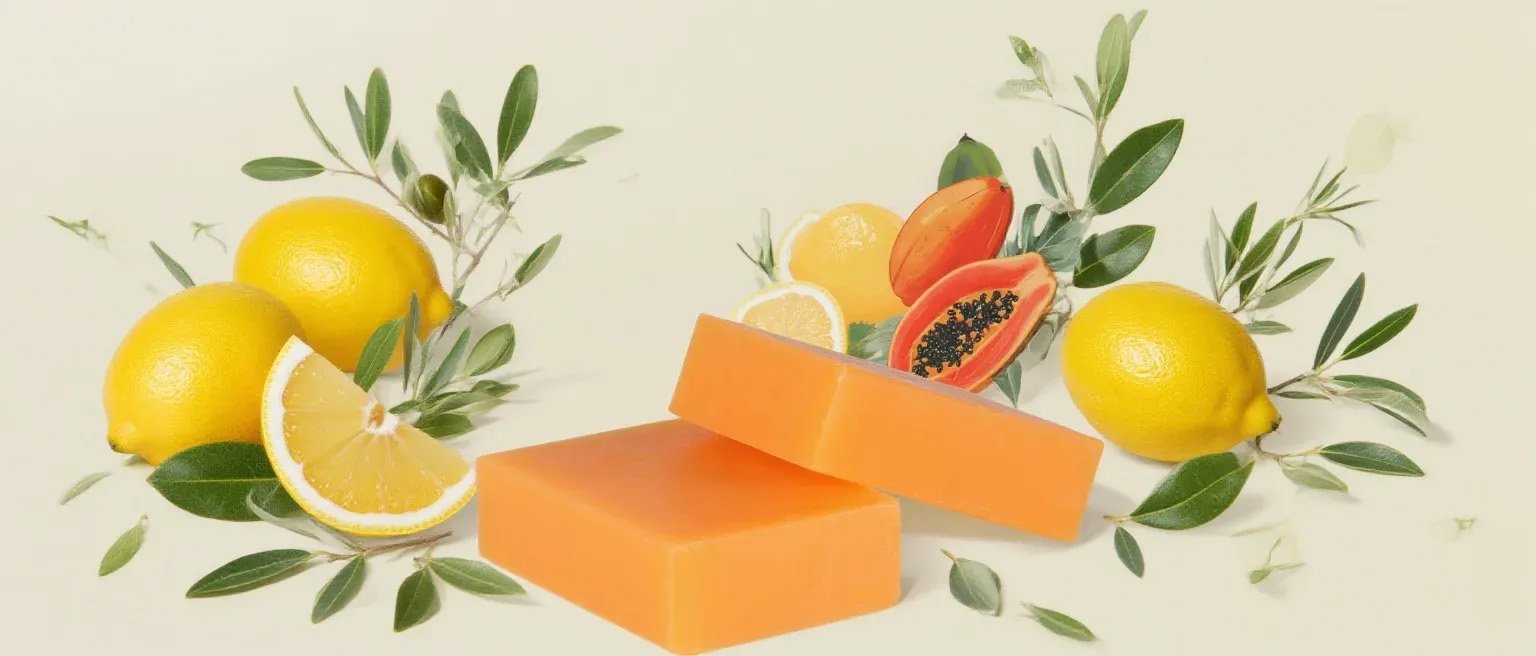
Flip over almost any bar of soap and you’ll find a cluster of friendly claims: cruelty-free, vegan, natural, handmade. They look like they all say the same thing, which is that this soap is kinder than the alternatives. In fact they answer three different questions, and only some of them are checked by anyone other than the brand that prints them.
Here’s the practical meaning behind each label, what’s regulated and what isn’t, and how to verify a claim before you rely on it.
Three Words, Three Different Questions
| Label | The question it answers | Legally defined in the US? | Verified by |
|---|---|---|---|
| Cruelty-free | Was it tested on animals? | No | Third-party programs such as Leaping Bunny or PETA, if certified |
| Vegan | Does it contain animal-derived ingredients? | No | Certifications such as The Vegan Society trademark or Certified Vegan, if certified |
| Natural | Where do the ingredients come from? | No | Only specific standards such as COSMOS, if certified |
The common thread is the “if certified.” Without a recognized third-party mark, each of these is the brand’s own statement.
Cruelty-Free: A Claim About Testing
Cruelty-free generally means that a product and its ingredients weren’t tested on animals during development. The US Food and Drug Administration has said it has no legal definition for “cruelty-free” or “not tested on animals,” so what the phrase covers varies from company to company. Animal testing also isn’t a legal requirement for selling cosmetics in the United States, so the absence of testing isn’t automatically a point of distinction, and a claim can be narrow: for example, “we don’t test our finished products” says nothing about whether ingredient suppliers do.
That’s why certifications matter:
- Leaping Bunny (Cruelty Free International) is widely regarded as the most rigorous standard. It applies to the whole company rather than a single product, requires that no new animal testing be used in any phase of development by the company, its laboratories or its suppliers, and relies on supplier monitoring, a fixed cut-off date and independent audits.
- PETA’s Beauty Without Bunnies is a broader, more accessible program. It’s based largely on company declarations rather than audits, and it has separate tiers: one for cruelty-free alone, and another for cruelty-free and vegan.
One piece of context worth knowing: the European Union has prohibited the sale of cosmetics tested on animals since 2013, so in the EU market, cruelty-free status is more a matter of the law than of a brand’s choice. In the US, where there’s no equivalent definition, the claim relies much more on third-party verification.
Vegan: A Claim About Ingredients
Vegan means a product contains no animal-derived ingredients. That’s a different question from testing, and the two don’t depend on each other: a vegan soap could in principle have been tested on animals, and a cruelty-free soap can contain animal-derived ingredients. In practice, many certifications cover both, but you shouldn’t assume it.
Soap has a few animal ingredients that people often don’t expect. When you read the ingredient list, these are the names to look for:
- Sodium tallowate (tallow, rendered animal fat) and sodium lardate (lard). Historically these were common soap bases.
- Lanolin, from sheep’s wool.
- Beeswax (cera alba) and honey (mel).
- Milk, such as goat, donkey or camel milk, and milk proteins.
- Silk proteins and carmine (CI 75470), a red colorant made from insects.
- Glycerin, which can be derived from plants or from animal fat, so a bare “glycerin” on a label doesn’t settle the question.
The Vegan Society’s trademark, established in 1990, certifies that a product is free from animal ingredients and wasn’t tested on animals, and Vegan Action runs the Certified Vegan mark.
Natural: The Vaguest Word of the Three
“Natural” has no legal definition for cosmetics in the US, and no regulator checks how it’s used. Two further things are worth knowing:
- Soap itself is made by a chemical reaction. Traditional soap forms when oils or fats react with an alkali such as sodium hydroxide (lye) in a process called saponification. Even a handmade soap with entirely plant-based oils goes through this reaction, which is why a natural bar is still alkaline. “Natural” describes where the starting materials came from, not what the finished product is like on your skin.
- Natural doesn’t mean gentle. Essential oils, citrus oils and plant extracts are natural and are also common triggers of irritation and allergy. Poison ivy is natural too.
Words like “handmade,” “cold-pressed,” “artisan,” “clean” and “green” are in the same category: perfectly reasonable descriptions of how a product is made or positioned, but not standards that anyone verifies. Formal natural and organic certifications, such as COSMOS, do exist and require audits.
A Quick Way to Check a Soap Label
- Look for a recognized third-party mark. For cruelty-free, Leaping Bunny or PETA. For vegan, The Vegan Society or Certified Vegan. Marks you don’t recognize deserve a quick search.
- Check the certifier’s database. Leaping Bunny and PETA both publish lists of certified brands, which is more reliable than a logo on a package.
- Read the ingredient list for animal-derived names. Sodium tallowate, lanolin, beeswax, honey, milk, silk and carmine are the usual suspects.
- Treat uncertified claims as the brand’s own statement. That isn’t necessarily dishonest, but it’s worth asking the company what the claim covers, especially for “cruelty-free,” which can be defined narrowly.
- Don’t let one label stand in for another. A natural soap isn’t automatically vegan, a vegan soap isn’t automatically cruelty-free, and none of them tell you whether the soap suits your skin.
How this applies to our bars: Our Green Tea Soap for Face & Body is a cold-pressed, plant-oil-based bar made with green tea leaves, coconut oil and shea butter, and is described as vegan. We’d encourage you to do exactly what this guide suggests: read the ingredient list, check for animal-derived names, and ask us what any claim covers. A label should be the start of a conversation about what’s in the bar, not the end of it.
Frequently Asked Questions
What does cruelty-free soap mean?
Cruelty-free generally means the finished product and its ingredients were not tested on animals during development. In the United States the FDA does not define or regulate the term, so the exact meaning depends on the brand unless a third-party certification such as Leaping Bunny backs it up.
Is vegan soap the same as cruelty-free soap?
No. Vegan describes ingredients: the soap contains nothing derived from animals. Cruelty-free describes testing: no animal testing during development. A soap can be one without being the other, although many certified products meet both.
Does natural soap mean it’s safe or gentle?
Not automatically. Natural has no legal definition for cosmetics in the US, and even traditional natural soap is made by reacting oils with an alkali, which gives it an alkaline pH. Natural ingredients such as essential oils can also irritate or trigger allergies.
What animal ingredients can be in soap?
Common ones include tallow (listed as sodium tallowate) and lard (sodium lardate), as well as lanolin, beeswax, honey, milk, silk and carmine colorant. Glycerin can also be sourced from animal fat in some products.
Which cruelty-free certification is the most rigorous?
Leaping Bunny is generally regarded as the most rigorous because it requires supplier monitoring, a fixed cut-off date and independent audits. PETA’s Beauty Without Bunnies program relies more on company declarations.
The Bottom Line
Cruelty-free is about testing, vegan is about ingredients, and natural is about sourcing, and none of the three has a legal definition for soap in the US. The most dependable way to read a label is to look for a recognized third-party certification, check the certifier’s own list, and read the ingredient panel for animal-derived names. Where a claim has no certification behind it, treat it as the brand’s statement and ask what it covers.
This article is for general educational purposes. Certification standards and regulatory positions change, so check the certifying organizations and the FDA directly for current details.
Sources Referenced
- U.S. Food and Drug Administration, “Cruelty-Free/Not Tested on Animals” guidance for cosmetics.
- Leaping Bunny Program (Cruelty Free International), Corporate Standard of Compassion for Animals.
- The Vegan Society, Vegan Trademark standards.
- PETA, Beauty Without Bunnies program information.
- Earth911, “Understanding Vegan and Cruelty-Free Certifications.”
