


Every autumn the same thing happens: skin that felt fine in July starts to feel tight after a shower, rough on the shins, and itchy by evening. It’s tempting to blame the soap or to assume you need something stronger. In reality, the biggest change is happening in the skin itself. Cold weather alters how well your skin barrier holds water, which changes what kind of soap and washing routine your skin can comfortably handle.
Here’s what shifts in winter, what to look for in a soap for dry skin in winter, and how to wash so you clean your skin without leaving it more stressed.
What Winter Actually Does to Your Skin Barrier
The outermost layer of skin, the stratum corneum, works like a brick wall: skin cells are the bricks, and a mixture of lipids, including ceramides, fatty acids and cholesterol, is the mortar that keeps water in. Transepidermal water loss (TEWL) is the standard measure of how much water escapes through that wall.
Seasonal studies have repeatedly found that this barrier performs worse in cold months:
- Research comparing seasons has reported higher TEWL and lower skin hydration in autumn and winter than in spring and summer, along with lower sebum (skin oil) content in the colder months.
- Work on healthy women in Kunming, China, found that barrier function, sebum and skin pigment all vary by season, with TEWL lowest in summer and peaking in winter.
- Researchers have also reported seasonal reductions in stratum corneum lipids, particularly ceramides, in winter, which probably contributes to the rough, scaly look of winter xerosis.
- A study of older adults’ lower legs concluded that winter dryness comes with structural changes: a looser stratum corneum that is more permeable to irritants and more reactive to sensory stimuli, which helps explain why winter skin itches and stings more easily.
- Exposed facial skin appears especially vulnerable. One comparison found that barrier function was significantly impaired in winter on both the cheek and the forearm, with a much bigger seasonal difference on the cheek.
The causes stack up. Cold outdoor air holds little moisture, indoor heating dries the air further, and low humidity encourages water to evaporate from the skin faster. The result is skin that’s drier, more fragile and quicker to react, even in people with no skin condition.
Why Your Cleanser Matters More in Winter
Any cleanser works by lifting oil and dirt off the skin, and in doing so it also removes some of the skin’s own surface lipids. In summer, with a sturdier barrier and more natural oil, that trade-off is easy to absorb. In winter, when the barrier is already running low on lipids, the same wash can tip skin from “a bit dry” to “tight, flaky and itchy.”
That’s why the best soap for winter dry skin isn’t the strongest one. It’s the one that cleans adequately while taking as little extra from a barrier that’s already under pressure. (We cover the role of soap alkalinity in more detail in our piece on why skin feels drier after washing.)
What to Look For in a Soap for Dry Skin in Winter
Conditioning fats and retained glycerin
Bars made with nourishing fats such as shea butter, and that retain the glycerin produced during soap-making, tend to feel less stripping. Glycerin is a humectant that helps draw and hold water at the skin’s surface. Check that the formula isn’t built almost entirely around very high-lather, high-degreasing ingredients.
A balance of cleansing and conditioning
Coconut oil is a common soap ingredient prized for rich lather and cleansing power, but a bar that leans heavily on it can feel drying. A recipe that pairs coconut oil with a softer, more conditioning fat is aiming at a middle ground.
Little heavy fragrance and minimal irritants
Winter skin reacts more readily, so strong fragrance or essential oil blends are more likely to sting. A simpler ingredient list is usually the safer choice.
Cautious use of exfoliating actives
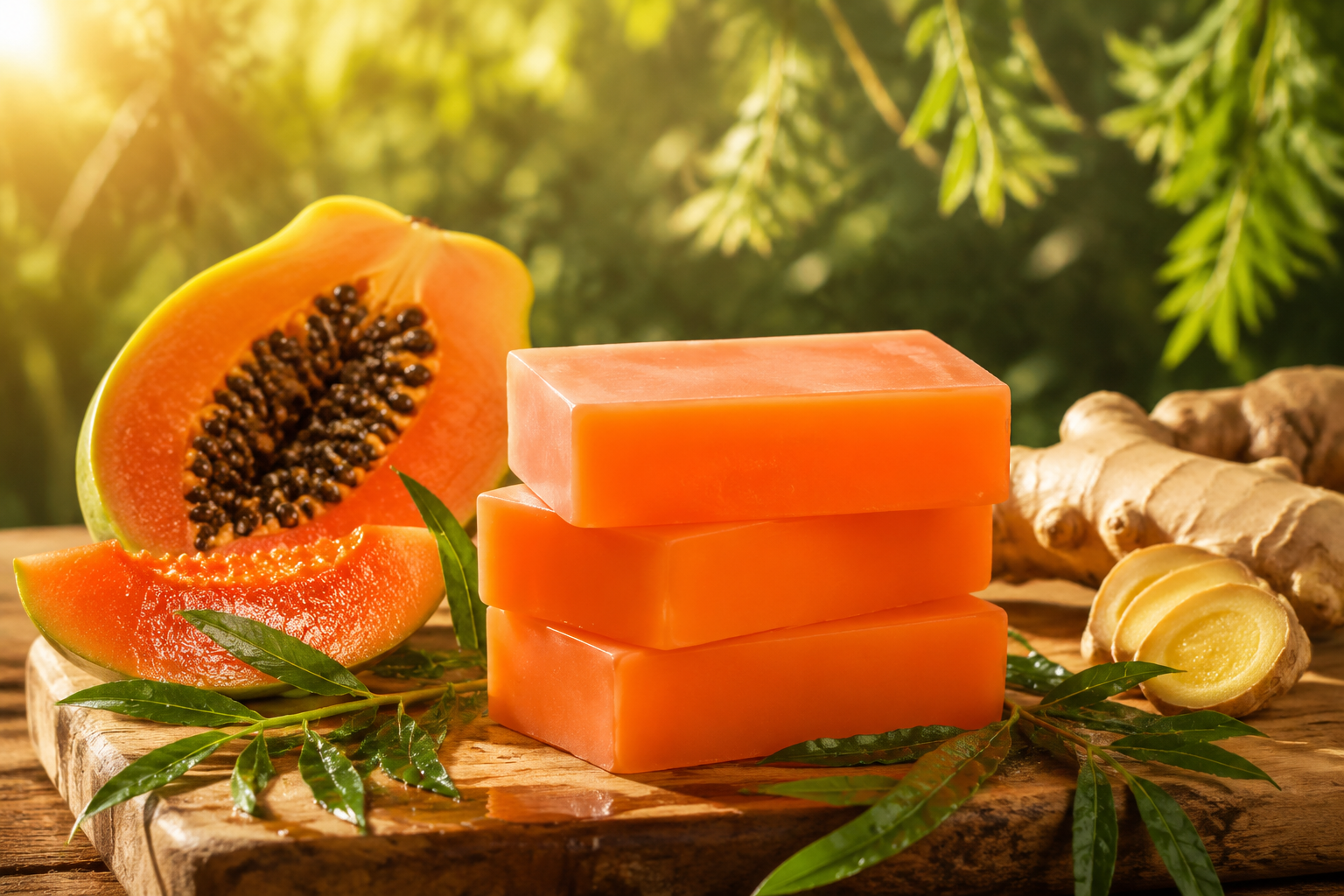
Papaya enzyme, kojic acid and similar actives are popular, but on a winter-stressed barrier they’re best used less often. If your skin feels tight or looks flaky, rotate in a plain, gentle bar and keep the brightening or exfoliating bar for once or twice a week, or for the warmer months.
How to Wash So Winter Skin Stays Comfortable
- Go lukewarm, not hot. Hot water removes more of the skin’s natural oils. Dermatology guidance generally recommends short, lukewarm showers, commonly in the range of 5 to 10 minutes.
- Use soap where you need it. Lather underarms, groin and feet, and give arms, legs and torso a lukewarm rinse unless they’re visibly dirty or sweaty.
- Lather in your hands, not on the skin. Work the bar into a foam first, which spreads cleanser gently instead of dragging a bar across dry skin.
- Pat dry. Rubbing with a towel irritates fragile skin. Blot gently and leave it slightly damp.
- Moisturize within a few minutes. Applying a moisturizer soon after bathing helps trap water in the skin. Richer creams and ointments with ingredients such as ceramides, glycerin or petrolatum generally hold up better in winter than light lotions.
- Add humidity. A humidifier in the bedroom, especially with indoor heating running, reduces how fast skin loses water overnight.
- Protect exposed skin. Gloves and a scarf reduce wind and cold exposure on hands and face.
Where PALFICAB fits: Our Green Tea Soap for Face & Body is a cold-pressed, vegan bar made with green tea leaves, coconut oil and shea butter, the pairing of cleansing and conditioning fats described above. It’s a good everyday option when you want something gentle, but it’s still a soap: if your skin feels tight afterward, wash less often and follow with a moisturizer, and always patch test a new bar first.
When Dry Skin Needs a Doctor
Ordinary winter dryness should ease with gentler washing and regular moisturizing. See a clinician if you notice any of the following:
- Cracks that bleed or look infected
- Intense itching that disrupts sleep
- Red, scaly or weeping patches, which can signal eczema or another skin condition
- No improvement after a couple of weeks of consistent, gentle care
Older adults and people with conditions such as eczema often need more tailored routines, so it’s worth asking a dermatologist or pharmacist about the right cleanser and moisturizer.
Frequently Asked Questions
Why does my skin get so dry in winter?
Cold, low-humidity air pulls water out of the skin’s outer layer, and studies have found higher transepidermal water loss and lower skin hydration in autumn and winter than in spring and summer. Indoor heating dries the air further.
What type of soap is best for dry skin in winter?
Look for a gentle, conditioning bar that keeps glycerin and contains nourishing fats such as shea butter, with little heavy fragrance and no aggressive exfoliating actives. Avoid very strongly degreasing formulas, and pair any soap with a moisturizer.
Are hot showers bad for dry skin?
Hot water and long showers remove more of the skin’s natural oils and can worsen dryness. Dermatology guidance generally recommends short, lukewarm showers.
How often should I use soap in winter?
You don’t need to lather your whole body every day. Using soap on the areas that need it, such as underarms, groin and feet, and rinsing the rest with lukewarm water can reduce dryness for many people.
When should I see a doctor about winter dry skin?
See a clinician if skin cracks or bleeds, itching is severe or disrupts sleep, you see red, scaly or weeping patches, or the dryness doesn’t improve after a couple of weeks of gentle care.
The Bottom Line
Winter dry skin isn’t a sign you’re washing wrong; it’s a measurable seasonal change in how well your skin barrier holds water. The most effective response is a combination: a gentle, conditioning soap, shorter and cooler showers, soap only where it’s needed, and moisturizer applied while skin is still damp. Choose the soap that suits a barrier under stress, and save the stronger, exfoliating bars for when your skin can handle them.
This article summarizes published research for general educational purposes and isn’t medical advice. If you have persistent dryness, eczema or another diagnosed skin condition, consult a dermatologist.
Sources Referenced
- “Seasonal variability in biophysical properties of stratum corneum from different anatomical sites.” Study on seasonal TEWL, hydration, pH and sebum changes.
- “The effect of environmental humidity and temperature on skin barrier function and dermatitis.” Review of humidity, temperature and barrier function.
- “Xerotic skin of the elderly: a summer versus winter comparison based on biophysical measurements.”
- “Environmental dew point and skin and lip weathering.” Comparison of winter and summer barrier function on cheek and forearm.
- “Dry skin in the winter is related to the ceramide profile in the stratum corneum and can be improved by treatment with a Eucalyptus extract.” Study on seasonal variation in barrier function in healthy women.
