


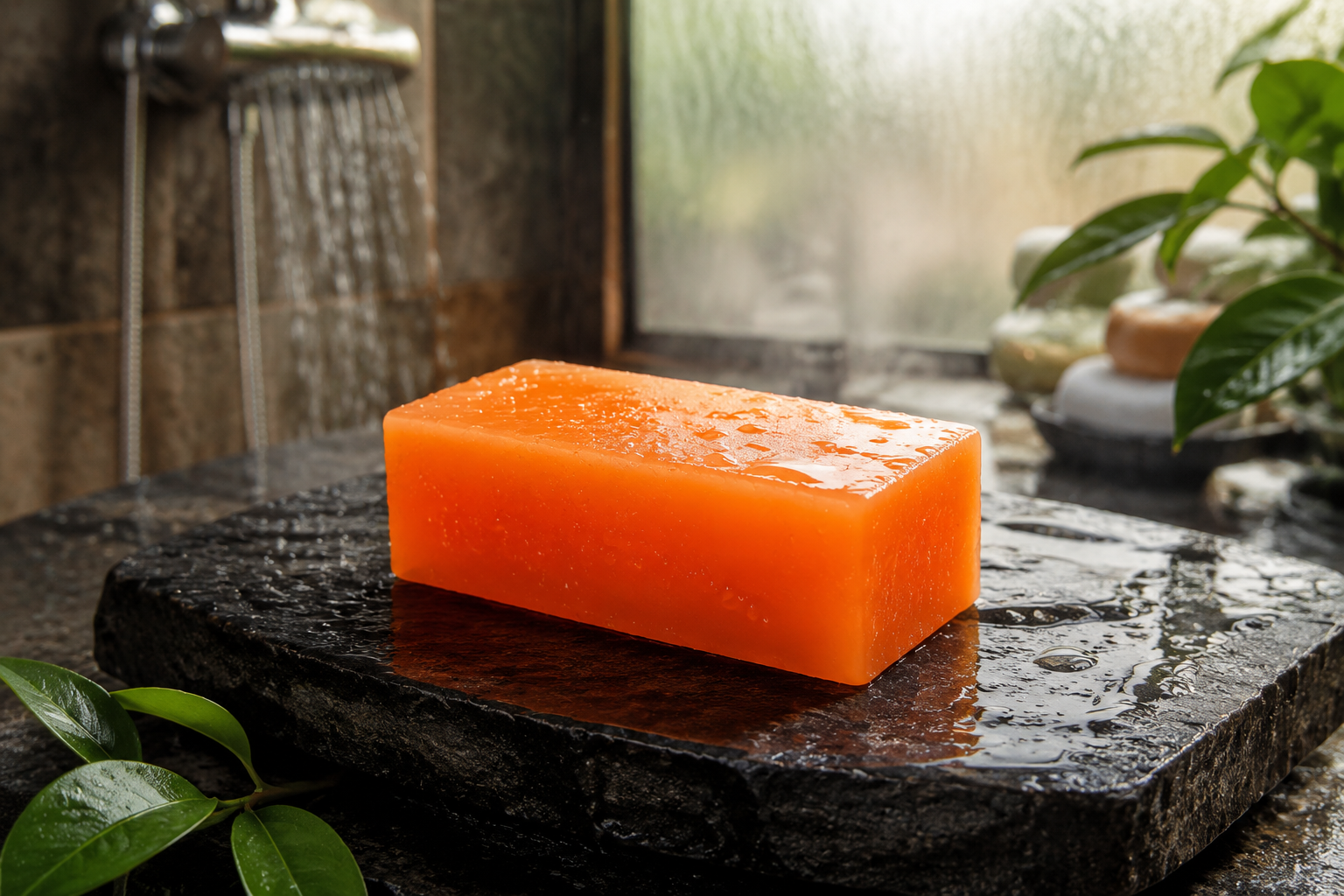
“Exfoliation” gets used as if it’s one single action, but a walnut scrub, a glycolic acid toner, and a papaya-based soap are doing three genuinely different things to your skin. Two of them work through friction or acid chemistry. Papain — the enzyme in papaya that gives it its exfoliating reputation — works through something closer to digestion. Understanding that difference actually matters for figuring out whether it’s the right fit for your skin, and when it isn’t.
What Papain Actually Is
Papain is a cysteine protease, a class of enzyme whose job is to break protein molecules apart by cutting the peptide bonds that hold amino acids together. It’s concentrated in the latex of the papaya plant, particularly in unripe fruit and the skin, and it has a long track record in pharmaceutical and food-processing use as a protein-digesting agent — a more established evidence base than a lot of botanical skincare ingredients get, precisely because papain’s protein-cleaving action has been studied outside of cosmetics for decades.
The outermost layer of skin, the stratum corneum, is made almost entirely of keratin — a structural protein. That overlap is the entire reason papain ended up in skincare: an enzyme built to digest protein has an obvious job to do on a layer of skin built out of protein.
The Actual Mechanism: Hydrolysis, Not Friction or Acid
A 2025 review in the journal Applied Sciences examining proteolytic enzymes in cosmetics — papain among them — described the mechanism specifically: these enzymes catalyze the hydrolysis of keratin protein bonds, which loosens and lifts away dead surface cells and supports the skin’s natural cell turnover process.
That’s a meaningfully different mechanism from the other two common exfoliation methods:
Physical exfoliation (scrubs, brushes, sponges) removes dead skin cells through mechanical abrasion — literally scraping the outer layer off. It works, but it applies uniform friction regardless of which cells are actually ready to shed, which is part of why over-scrubbing is such a common cause of irritation and micro-tears.
Chemical exfoliation (AHAs like glycolic acid, BHAs like salicylic acid) works by dissolving the “glue” — desmosomal bonds — that holds skin cells together, encouraging looser cells to release. This is effective but pH-dependent and can increase sun sensitivity.
Enzymatic exfoliation (papain, bromelain, ficin) works through targeted protein digestion. A widely cited explanation of the mechanism notes that normal, living keratinocytes are tightly bound together through desmosomal proteins, while already-dead, loosely attached surface cells have more exposed, degraded keratin structures — which gives proteolytic enzymes like papain a degree of natural selectivity toward cells that are already on their way out, rather than uniformly attacking the skin’s surface the way a scrub does.
What the Research Actually Shows — And Where It’s Thin
It’s worth being direct here: enzymatic exfoliation is a genuinely under-researched category compared to chemical exfoliants. A systematic review published in the Journal of Cosmetic Dermatology searched major scientific databases for clinical research on proteolytic enzymes as skin exfoliants and found only 11 qualifying articles in total, with very few actual clinical trials among them. The review’s own conclusion was direct: while existing studies demonstrate that enzymes can exfoliate skin and improve some measured skin characteristics, more robust in vivo research is still needed before enzymatic exfoliation can be recommended with full confidence as a clinical treatment.
That’s not a reason to dismiss it — the same review noted real, demonstrated exfoliating effects in the studies that do exist, including improved penetration of other active ingredients applied afterward, which is a genuinely useful property for a multi-step routine. It’s a reason to treat papain as “reasonably well-supported but still an emerging category” rather than a fully settled clinical treatment the way something like glycolic acid is.
One consistently noted advantage in this research: because enzymatic exfoliation doesn’t rely on the pH-driven chemistry that acids need to work, formulations don’t have to be as aggressively acidic to be effective — which is part of why enzyme-based exfoliants are generally positioned as gentler on the skin barrier than higher-strength chemical peels.
Who Should Actually Be Cautious
Despite the “gentle, natural” reputation, papain isn’t automatically suitable for everyone, and a few groups should be more careful with it:
Broken, actively inflamed, or compromised skin. Since papain works by breaking down protein, applying it to skin with an already-disrupted barrier — active eczema flares, open acne lesions, cuts, or sunburn — can cause more irritation than benefit, because there’s less intact structure to selectively target and more exposed tissue for the enzyme to act on.
Very reactive or allergy-prone skin. The same cosmetic dermatology research on proteolytic enzymes flagged the importance of formulation stability and noted these enzymes carry some potential for allergens or irritation, particularly at higher concentrations or with unstable formulations — worth being aware of if you have a history of reacting to new actives.
Anyone combining it with other actives aggressively. Because one documented effect of enzymatic exfoliation is improved penetration of ingredients applied afterward, layering papain with strong retinoids or high-percentage acid treatments in the same routine can amplify irritation rather than just enhancing absorption.
Right after sun exposure or before extended sun exposure. Freshly exfoliated skin — regardless of method — is more vulnerable to UV damage, so daytime use should always be paired with sunscreen.
For most other skin types, papain-based cleansing is generally considered one of the gentler entry points into exfoliation, precisely because it lacks the abrasive friction of scrubs and the pH intensity of stronger acids.
Where This Fits Into a Routine
Enzymatic exfoliation from something like a papaya soap is generally better suited to regular, lower-intensity use — a few times a week as part of a cleansing routine — rather than treated as an occasional intensive treatment the way a physical scrub or a high-percentage acid peel often is. Because the mechanism selectively targets already-loosened surface cells rather than applying blanket abrasion, it tends to tolerate more frequent use without the same cumulative barrier stress that repeated scrubbing can cause.
Frequently Asked Questions
Is papain the same as a chemical exfoliant like glycolic acid? No. Chemical exfoliants dissolve the bonds between skin cells through acid chemistry, while papain is an enzyme that breaks down keratin protein directly through hydrolysis — a different mechanism, even though both result in exfoliation.
Is enzymatic exfoliation gentler than physical scrubs? Generally, yes. It doesn’t rely on mechanical friction, and because it has some selectivity toward already-loosened dead cells rather than uniformly abrading the surface, it tends to be less likely to cause micro-tears than a physical scrub.
Can I use papaya soap on sensitive or broken skin? Caution is warranted on actively inflamed, broken, or compromised skin, since papain’s protein-digesting action can increase irritation where the skin barrier is already disrupted. Intact, non-inflamed sensitive skin generally tolerates enzymatic exfoliation better than physical or strong chemical methods.
How often should you use an enzyme exfoliant? Enzymatic exfoliants are generally suited to more frequent, lower-intensity use — often several times a week — compared to intensive chemical peels or aggressive physical scrubs, though individual tolerance varies.
Is there strong clinical research behind papain as an exfoliant? There’s real, published research supporting the mechanism and effects, but a systematic review found only a small number of qualifying clinical studies overall, meaning the evidence base is genuine but still developing compared to well-established chemical exfoliants like glycolic acid.
The Bottom Line
Papain doesn’t exfoliate by scraping or by dissolving cell-to-cell bonds with acid — it works by directly digesting the keratin protein that makes up dead surface skin, with some natural selectivity toward cells that are already loosening. That mechanism generally makes it one of the gentler paths into regular exfoliation, but “gentle” doesn’t mean “use anywhere, always” — broken or actively inflamed skin, and skin already layered with other strong actives, are situations where more caution is warranted.
This article summarizes published cosmetic dermatology research for general educational purposes and isn’t medical advice. If you have a diagnosed skin condition or a history of reacting to new skincare ingredients, it’s worth patch-testing or checking with a dermatologist first.
Sources referenced
- Lykartsi, E.E., et al. “Proteolytic Enzyme Activities of Bromelain, Ficin, and Papain from Fruit By-Products and Potential Applications in Sustainable and Functional Cosmetics for Skincare.” Applied Sciences, 2025.
- Trevisol, T.C., et al. “An overview of the use of proteolytic enzymes as exfoliating agents.” Journal of Cosmetic Dermatology, 2022.
- Smith, W.P., et al. “Topical proteolytic enzymes affect epidermal and dermal properties.” International Journal of Cosmetic Science, 2007.
